Be the “personal trainer”of your own brain!
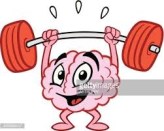
Our brain is trainable
Since an early age I was strongly against determinism.
I simply didn’t accept anybody telling me that things had to be done certain ways, at certain times and so on without making my own assessment first.
For instance, there were constant reminders that I had to have babies before I turned 30 or my chances of being a mother were going to be very slim or even non-existent or that after a “certain age” we would all become fat, regardless of our eating habits.
Although I understand that infertility may increase with age, I don’t think that our lives need to be driven by this fact, nor that we should just let our bodies go because that is the “way it is”. In reality, we do have a choice.
What fascinates me the most in this context is how we may be denying ourselves opportunities by believing in a set of determined facts – as determined, of course, by someone else’s experience. One of these opportunities is the chance to learn and acquire a set of new skills or abilities, including learning a new language, for example, at any age of our lives.
Curious about this process, and convinced that we can set our minds to do whatever we want, I began researching and following all sorts of think tanks that address the trends, investigations, advances and innovation in all areas of knowledge in our world, especially as they relate to discoveries about our brain.
This is how I came across a fascinating video of Ruby Wax. I need to confess here, because there is no point in lying to you or to myself, I didn’t know who she was at the outset. However, after watching her video about brain plasticity on the Big Think website I went straight to research everything I could find about her and her fascinating work.
Wax talks about how she adopted a proactive behaviour towards her depression and decided to investigate how to tackle it by understanding the functioning of her own brain. She explains that “depression is a sickness of the brain. When your lungs, liver, kidneys, etc., get sick you get sympathy. When your brain gets sick, they tell you to perk up”.
Wax did not simply read about our most complex organ, she took a Master in Neuroscience at Oxford University to get to the bottom of it!
So why have I veered into brain plasticity if I started talking about determinism? Simply because Wax says something deeply enlightening: Our brain can be rewired. And it keeps changing because it is dependent on experience.
“You are the architect of your own brain. You have the ability to rewire yourself, just by changing the way you think, by practising mindfulness”, says Wax.
So, if there are any doubts about the uselessness of preconceived ideas and determinism, there shouldn’t be. We have the knowledge now to fly as high as we are willing to try.
Inspired, I followed Wax’s initiative (not to the point of taking a Master at Oxford) and carried out my own research about this business of brain plasticity. Although there is tons of information about it, I would point to the research of Michael Merzenich, a neuroscientist and professor emeritus at the University of California, San Francisco who in 2004 revealed during a TED conference that the “…brain retains its ability to alter itself well into adulthood — suggesting that brains with injuries or disease might be able to recover function, even later in life…”
Basically, Merzenich sustains that the brain is constructed to change and possesses an incredible power: an ability to actively rewire itself! Indeed, Merzenich researches ways to harness the brain’s plasticity to improve our skills and recover lost function.
One experiment shows how after a monkey repeatedly was taught how to use a spoon properly, its brain showed some physical growth in the area used to master the spoon skill. This represents a change on hundreds of billions of neurones in the brain.
“This is constructed by physical change and the level of construction is massive”, explained Merzenich. So, our brain is adaptable and flexible and allows us to learn until the last days of our lives.
So, back to determinism. Remember the old (very old indeed!) expression you can’t teach an old dog new tricks? We can leave that one where it belongs, in the book of archaic and antievolutionary thinking. The truth is that we can become the “personal trainers” of our own brain and help it to not only get into shape but to actually learn many “new tricks”. And we can continue to do that until the last days of our lives.
In my next blog I will write about mindfulness as a tool to rewire our brain. Hasta la próxima!
Interesting links:
http://www.ted.com/read/ted-studies/neuroscience
hhtp://www.ted.com/talks/paola_antonelli_previews_design_and_the_elastic_mind

 The Eclectic Planet